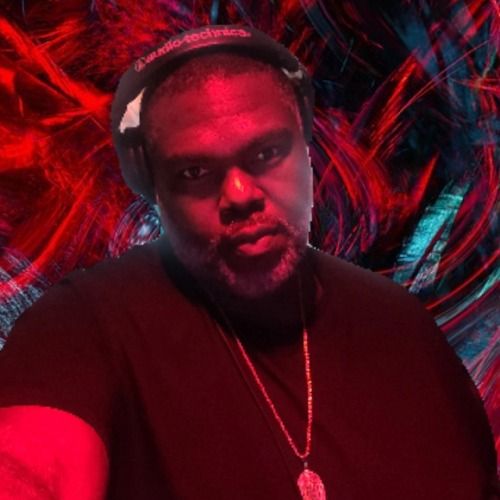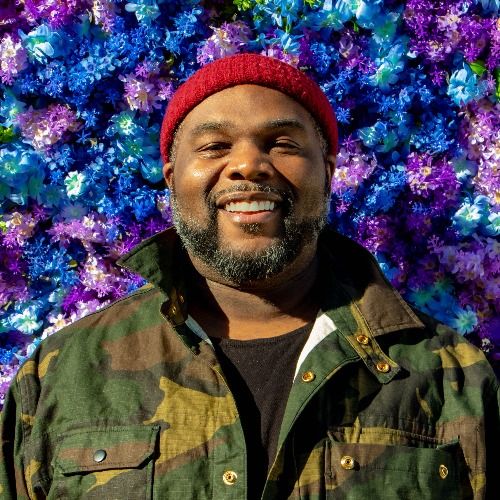

Episode 211
The Wop at 40: The Greatest Hip Hop Dance Ever and the Groove of Mid-80s Black Parties
The Wop turned 40, and this episode sits right in that mid‑80s pocket where hood parties, basement jams, and early music videos shaped how we moved and how we saw ourselves on the floor. DJ Sir Daniel and Jay Ray pull from memory, region, and music history to talk through why this simple little move still says so much about Black joy, style, and rhythm.
- How The Wop became the defining hip hop dance for a generation, from its simplicity to why it still looks cool in videos and at parties decades later.
- The songs, tempos, and producers that gave The Wop its groove, from B Fats’ “Woppit” to that Eric B. & Rakim feel and the Dougie Fresh and Herbie Love Bug sound.
- The many “ways to Wop,” including aggressive, flirty, playful, and party-time versions, and what those variations say about nuance in Black culture.
- How region and era shaped the move, from New York’s head‑driven style to D.C.’s upper‑body wave, and how dances traveled without the internet through tours, tapes, and TV.
- A bigger conversation on the “genetic code” of Black dance, what today’s music might be losing, and the kind of time‑traveling parties that could unlock that feeling again.
Chapter Markers
00:00 Intro Theme
00:16 Welcome to the Show
00:27 The Significance of The Wop
02:29 Cultural Impact of The Wop
05:55 Regional Variations of The Wop
07:40 Historical Context and Evolution
17:01 The Role of Music Videos
18:32 The Genetic Code of Dance
22:13 Conclusion and Call to Action
23:42 Outro Theme
Support Queue Points
Become An Insider: https://link.queuepoints.com/membership
#QueuePoints, #TheWop, #HipHopDance, #80sHipHop, #GoldenEraHipHop, #BlackMusicHistory, #BlackCulture, #BlackJoy, #BasementParties, #BlackParties, #LineDances, #OldSchoolDance, #BlackHistoryMonth, #RBHistory, #DJCulture, #MusicAndMemories, #CookoutVibes, #QuietStormEnergy, #BlackFamilyTraditions, #BlackCommunity, #MusicNostalgia, #HipHopCulture, #EricBAndRakim, #DougieFresh, #JanetJackson, #MCHammer, #PaulaAbdul, #BlackDanceCulture, #Podcast, #MusicPodcast, #CulturalCommentary, #BlackPodcasts, #JayRay, #DJSirDaniel
Transcript
Greetings and welcome to another episode of Queue Points podcast.
Sir Daniel:I am DJ Sir Daniel.
Jay Ray:And my name is Jay Ray, sometimes known by my governments
Jay Ray:as Johnnie Ray Kornegay III ii.
Jay Ray:And we're about to dip right into our childhoods because this
Jay Ray:thing here was a major dance.
Jay Ray:And Sir Daniel, to that point, how major is this dance?
Jay Ray:What's your hot take on the, on the dance, The Wop?
Sir Daniel:So, um, this black history month, um, we are delving
Sir Daniel:into dances, line dances, things that you don't really think about but are
Sir Daniel:very, very important to the culture.
Sir Daniel:And we want to recognize a hood dance that started in, in the eighties, um, bubbled
Sir Daniel:out of the golden era of rap and hip hop.
Sir Daniel:And I say, I. My opinion is the quintessential hip hop
Sir Daniel:dance move that never gets old.
Sir Daniel:You can still do it to this day.
Sir Daniel:It's still relevant, it still looks cool, and I might sound, I might sound
Sir Daniel:like an old man saying this, but The Wop is the, is the best hip hop dance.
Sir Daniel:Ever.
Sir Daniel:Yes, I said it.
Sir Daniel:It's the best hip hop dance ever.
Sir Daniel:And I believe it is.
Sir Daniel:So, because there is, there's a simplicity to it, but it just,
Sir Daniel:I think it just looks cool.
Sir Daniel:I think it looks cool.
Sir Daniel:I think it's, um, it's easy to pick up on.
Sir Daniel:Um, it could be done at various speeds and, um, you don't have to.
Sir Daniel:It doesn't require a whole lot of aerobic.
Sir Daniel:Um, no, it doesn't require like a whole lot of aerobic, uh, a lot of
Sir Daniel:aerobic, um, movement and, um, power for your body, but still it's effective.
Sir Daniel:It's, I don't know, I think it just looks cool and it just, and
Sir Daniel:it's just so dope for me to see.
Sir Daniel:I love seeing it in music videos.
Sir Daniel:And, uh, what did you think of the WP.
Jay Ray:Oh my God, I love The Wop.
Jay Ray:Um, and I agree with you.
Jay Ray:I think, uh, from a hip.
Jay Ray:Culture perspective.
Jay Ray:There's not a more defining dance for the culture.
Jay Ray:Like when you think of hip hop dances.
Jay Ray:Yeah, there are a ton of them.
Jay Ray:You could talk about the running man.
Jay Ray:You could talk about the Peewee Herman.
Jay Ray:You could talk about the cabbage patch,
Jay Ray:but the WP was squarely hip hop and there are a couple of things and I'm
Jay Ray:curious to know what you think about this, sir Daniel, but I do think that
Jay Ray:the WP represents a couple of things.
Jay Ray:One.
Jay Ray:To your point, it is a dance that allows, uh, that also gave hip hop a tempo.
Jay Ray:For a
Jay Ray:period of time, right?
Jay Ray:So the songs that were created in particular around the time that,
Jay Ray:that The Wop was popular, kind of had a specific flow so that people
Jay Ray:could wop to it.
Jay Ray:So that's one thing.
Jay Ray:But I think the other thing that makes The Wop unique is like black culture.
Jay Ray:We love.
Jay Ray:Nuance, right?
Jay Ray:So we have a lot of ways to do a thing or say a thing, right?
Jay Ray:So that we're conveying a message to someone.
Jay Ray:And The Wop, what I love about it is it can be done.
Jay Ray:To represent many different things.
Jay Ray:So there's like aggressive whopping, there is sensual whopping, there
Jay Ray:is party time whopping, there is funny games whopping, you know, and
Jay Ray:all of these are the same dance.
Jay Ray:Using hands in a certain way, using your head in a certain way.
Jay Ray:It's like black culture on steroids.
Jay Ray:It's like, oh, they are battling right now.
Sir Daniel:Mm-hmm.
Jay Ray:they have at a party time.
Jay Ray:Oh, they really into each other, but they're whopping.
Jay Ray:It's just all D It's all a different variation.
Sir Daniel:It's, it's all things all at the same time.
Sir Daniel:And that's the beauty of it.
Sir Daniel:And I, I want to throw in there also that The Wop gave men permission to dance.
Sir Daniel:Like, see, there's a, I don't think even then, I don't think,
Sir Daniel:um, those early days of hip hop.
Sir Daniel:Was aggre was male aggressive?
Sir Daniel:It did have some, you know, machismo to it.
Sir Daniel:But I think dance is like the wap.
Sir Daniel:You know your hood, dude, you know your, you're a block hugger.
Sir Daniel:He could, he could do the WP but he can have a, a serious.
Sir Daniel:Like, um, snarl on his face and still be cool, still be moving to the beat and,
Sir Daniel:um, and not, and still have a young lady feel like, oh, she can, she can engage
Sir Daniel:him in this dance because he's doing it, but even though he's doing it from a B-boy
Sir Daniel:stance and he's, you know, he's looking assertive, he's looking aggressive while
Sir Daniel:doing it, but it still gave him permission or an outlet to move his body and still.
Sir Daniel:Retain some, um, masculinity, some, you know, machismo at the same time.
Sir Daniel:So that's why the is everything everywhere, all at one time.
Sir Daniel:The best.
Sir Daniel:That's why it's the.
Jay Ray:That's why it's the best.
Jay Ray:I'm, I'm, I'm, I'm also curious, right, so hip hop.
Jay Ray:Ooh.
Jay Ray:In particular, our era.
Jay Ray:Um, and y'all, gen Z folks and Gen Alpha let us know what's up in y'all era.
Jay Ray:'cause sir, I mean, I'm, we not y'all age, so we don't know kind of what that
Jay Ray:that's like, but for us was, it was, it was always a flurry of dances, right?
Jay Ray:So the first, I guess, big hip hop dance that I remember was the Peewee Herman.
Jay Ray:Um, so the Peewee Herman was kind of like the first big
Jay Ray:dance that I remember and Right,
Jay Ray:and the WP kind of came in.
Jay Ray:Um, I, I would love to know too, there's no documented history on who
Jay Ray:was the first person to like do a WP.
Jay Ray:Clearly it's, it's clearly tied to New York historically, but like
Jay Ray:how it came to be is interesting.
Jay Ray:I'm wondering if Eric B and Rakim, um, had something that, that sound of the
Jay Ray:way Rakim was producing had something that kind of gave it this like thing.
Jay Ray:I don't know.
Jay Ray:But what we do know is that it's the 40th anniversary of
Jay Ray:w it 1986 w it came out now.
Jay Ray:I got who it later.
Jay Ray:So you were in New York at the time, so
Jay Ray:I didn't hear who it until maybe a decade later after it came out.
Jay Ray:Um, what was that like?
Jay Ray:Because that came out and then was like, it was like a, a
Jay Ray:fork, a a, a dividing line.
Jay Ray:Like the whop is a thing.
Sir Daniel:Yeah, so WPP it by one BFAs, um, an Mc outta Harlem, um, which kind of.
Sir Daniel:So it kind of lends to this whole, did it come from Harlem?
Sir Daniel:Because I do, even though BFAs was the first, and to what, to my
Sir Daniel:knowledge, the only rapper to, to.
Sir Daniel:To name a song after the dance, that particular dance called the wpp it.
Sir Daniel:So, but when you look back at, um, say a Dougie Fresh, Dougie
Sir Daniel:fresh is all the way to heaven.
Sir Daniel:The the, the girls were dancing, they were doing the wap real heavy in that video.
Sir Daniel:And, um, that, that tempo that you were speaking of, that,
Sir Daniel:that particular, you know, 98.
Sir Daniel:99 BPMs with the, I don't know how to explain this, this sound effect, but it
Sir Daniel:was very present in a lot of Dougie Fresh and Herbie Love pro love bug productions.
Sir Daniel:But it was that,
Jay Ray:Oh, yeah, yeah, yeah, yeah.
Jay Ray:That is, uh, that is a, a, uh, a, that thing.
Jay Ray:A, a, not a shaker, but
Jay Ray:you would, the metal, it was the, the, the mechanical version of
Jay Ray:that.
Jay Ray:I can't remember.
Jay Ray:I think it was called a shaker actually.
Jay Ray:So, yeah.
Jay Ray:Yeah.
Sir Daniel:So that, I think when you heard that particular sound effect,
Sir Daniel:that instrument, I think that led to, it kind of automatically made you feel
Sir Daniel:like, oh, I got, I could do a, a stern WA to this because the metal shaker is
Sir Daniel:in fact being played in that record.
Sir Daniel:Um, but yeah, I think BFAs goes down in history is probably
Sir Daniel:the only person to lend.
Sir Daniel:To give to, to, to give a record to that, to that dance, or to
Sir Daniel:produce a record around that dance.
Sir Daniel:And there's, and when you think about it, there's not a whole lot of
Sir Daniel:records dedicated to those dances.
Sir Daniel:You have the wpp it, um, wpp, it, you have, uh, the Peewee Herman.
Sir Daniel:You do have
Jay Ray:Mm-hmm.
Sir Daniel:s uh, Smurf's Revenge, which is dedicated to the Smurf.
Sir Daniel:But, um.
Sir Daniel:Any of the other dancers, like the Running Man was so popular, the Roger Rabbit.
Sir Daniel:Um.
Sir Daniel:Some people call it the crab, and that's another thing we could talk about how
Sir Daniel:these dances traveled around before, because they traveled before we had
Sir Daniel:the internet and before we had YouTube.
Sir Daniel:So those dances got around, but we don't know how.
Sir Daniel:Well we kind, I can think, I can theorize how they got around to different regions
Sir Daniel:of the country, but then the dancers will always take on different names in
Sir Daniel:different regions of the country and there would be some variations on it as, um.
Sir Daniel:Because you taught me that there was a DC version of the
Jay Ray:It is, there's a very, um, unique version of the wp
Sir Daniel:Mm-hmm.
Jay Ray:um, ca It's the DC wp essentially, it,
Sir Daniel:demonstrate.
Jay Ray:I, okay, so for the people who are watching, for the people who
Jay Ray:are listening, y'all need to come to the video version and wa and watch.
Jay Ray:But I remember the DC WP.
Jay Ray:As being very, um, upper body heavy, whereas the New York wp,
Jay Ray:'cause there was a distinction,
Jay Ray:right?
Jay Ray:The New York WP was Head shoulders, but it was very head focused and
Jay Ray:you could add hands in there.
Jay Ray:The DC wop was upper body hand focus where it was like a
Jay Ray:wave and you went to the side.
Jay Ray:Back and forth, double time, da da.
Jay Ray:So it's very similar.
Jay Ray:It's just that my head is not, come to the video.
Jay Ray:My head isn't moving right.
Jay Ray:But my, my upper body is moving and I'm, I'm like not into it.
Jay Ray:You know, so that's what I remember the DC WP as being DC people.
Jay Ray:Let me know if I'm off, but when I was a kid, we called that the DC
Sir Daniel:DC one.
Sir Daniel:And it's so funny because when you demonstrated that for me the first time,
Sir Daniel:I immediately thought, well, that looks like the, a variation on the cabbage
Jay Ray:It does.
Sir Daniel:that there's a vari that's a variation on
Jay Ray:It is, right?
Jay Ray:'cause the car, right?
Jay Ray:Yep.
Sir Daniel:isolate your arms, but your, your torso is moving from
Sir Daniel:left to right and like you said, you could double time and bring it
Sir Daniel:back and bring it around and, oh,
Jay Ray:little bit of the snake in there too, like,
Sir Daniel:Little bit of snake.
Sir Daniel:Yes.
Sir Daniel:So sidebar, um, preparing for the show, uh, Jay Ray.
Sir Daniel:I wanted to show Jay Ray this video that I know he had never seen.
Jay Ray:oh my God.
Sir Daniel:out.
Sir Daniel:Shout out to r and b, um, legends from, where were they from?
Sir Daniel:Sand Bernardino.
Jay Ray:Yeah.
Jay Ray:Somewhere in Cali.
Sir Daniel:Sam, somewhere in Cali's, um, a a all female r and b group called
Sir Daniel:New Choice and their debut single called Cold Stupid, which the name alone lets
Sir Daniel:you know that it's, it's, it's so 1986.
Jay Ray:Yes.
Sir Daniel:So 1986, but when I tell you I get my life every time
Sir Daniel:I watch that video, because they did every single hip hop dance at
Sir Daniel:a what appeared to be a frat party, and which featured actual fraternity
Sir Daniel:and sorority members in the music
Jay Ray:all, all of them represented.
Jay Ray:The whole MPHC was part of this video.
Sir Daniel:And when I new choice was doing the cabbage patch, they were
Sir Daniel:doing the wat they were doing the snake.
Sir Daniel:Everything you can imagine was in that v. Young people listening.
Sir Daniel:If you want to see, and maybe we should put this in our,
Jay Ray:We were in the description.
Sir Daniel:Yeah, in the description, if you want to see, get a picture of
Sir Daniel:what those old school dances really looked like, because I know we get
Sir Daniel:nostalgic and you hear people say, do a old school dance, and most of the
Sir Daniel:time they do stuff that they've seen Bobby Brown doing, which is phenomenal.
Sir Daniel:However.
Jay Ray:Yes.
Sir Daniel:Y'all got to see what it, y'all have to see what it
Sir Daniel:really, how it really went down in 86 before it got really polished
Sir Daniel:and commercialized, because then choreographers got ahold of it.
Sir Daniel:Like your Paula Abduls, you mentioned the snake.
Jay Ray:The snake.
Jay Ray:Yep.
Sir Daniel:Paula Abdul brought the snake and um.
Sir Daniel:The variations of hip hop dances to Janet Jackson and to whoever
Sir Daniel:she was choreographing for.
Sir Daniel:And those were mainstream artists.
Sir Daniel:And so, um, there was one other point I wanted to make.
Sir Daniel:Oh yes.
Sir Daniel:Another video y'all should look at is the original version of Mc Hammers.
Sir Daniel:Let's get it started.
Sir Daniel:It's not the glossy
Jay Ray:Glo, not the
Jay Ray:glossy version where he's on stage.
Sir Daniel:No, this one they did at a underground club.
Sir Daniel:You could tell somebody's handheld VHS recorder recorded it.
Sir Daniel:They were wearing all troop, these troop sweatsuits, and it was the
Sir Daniel:hardest dancing you could ever imagine.
Sir Daniel:Mc hammer.
Sir Daniel:3, 5, 7 backing him up.
Sir Daniel:I think you need to watch that just to get a taste of the
Sir Daniel:essence of what it was like.
Sir Daniel:And that's the, that's Oakland, that's way on the West Coast.
Sir Daniel:So again, when we were talking about how these dances travel, uh, from
Sir Daniel:state to state and region to region, I'm thinking it was due to the tours.
Sir Daniel:The tours and, and the, the, the hip hop dance.
Sir Daniel:The hip hop artists doing their, um, the routines on stage.
Sir Daniel:And like you said, each state would do their own variation
Sir Daniel:and put their own flavor on it.
Jay Ray:Yeah.
Jay Ray:Yes, I agree.
Jay Ray:I also, Ooh, this is gonna be a provocative point too, but I think
Jay Ray:this could be part of it as well.
Jay Ray:Black people in particular
Sir Daniel:Mm-hmm.
Jay Ray:have.
Jay Ray:Stuff in our DNA that we just be doing.
Jay Ray:Right?
Jay Ray:And it is crazy when you listen to certain songs, how it just makes you
Jay Ray:want to kind of do a particular movement.
Jay Ray:You don't know that that movement.
Jay Ray:Is something that somebody is doing somewhere else.
Jay Ray:But, um, Eric B for President is the song that keeps running through my head.
Jay Ray:'cause I heavily associate that song with The Wop just because of the way it flows.
Jay Ray:All of that and.
Jay Ray:I can imagine that someone in New York, in Philly, in dc, in Los Angeles,
Jay Ray:in Detroit, would hear that song and be like, boom, boom, boom, boom.
Jay Ray:You know what I'm saying?
Jay Ray:Like, they would just start doing something
Jay Ray:automatically because the the rhythm.
Jay Ray:And the, the, the, the way that song kind of sits in your body
Jay Ray:makes you do a certain movement.
Jay Ray:So I do think it's the tours.
Jay Ray:I do think it's that.
Jay Ray:I also think it might be some DNA in black folks and too.
Jay Ray:The other thing is music videos were happening at the time lower budget.
Jay Ray:'cause I went and I found the WPP IT video only for this.
Jay Ray:I had only heard the song.
Jay Ray:I had never even sought out to do the video.
Jay Ray:So I'm like, oh well lemme see if there was a video, there is something on YouTube
Jay Ray:where somebody took a camera to their tv.
Sir Daniel:Yes, that was the only recorded it off of a v hs.
Jay Ray:Exactly.
Jay Ray:So I finally saw the whopping video.
Jay Ray:Oh my God.
Jay Ray:Can we talk about the fun?
Jay Ray:Like, and I was too young to experience it in that way, right?
Jay Ray:Like if I was, 'cause in 86, I'm nine.
Jay Ray:You know what I'm saying?
Jay Ray:I am doing these dances at, at kitty parties.
Jay Ray:You know what I'm saying?
Jay Ray:It's fun, but it's, it's kid fun.
Jay Ray:I would've loved to be at the teen clubs, so by the time I start
Jay Ray:going to the teen club, the WIP is already done, so this is 91.
Jay Ray:I'm at the teen clubs.
Jay Ray:We're running manning
Jay Ray:and cabbage patching and doing all of this other stuff that I
Jay Ray:wasn't doing The Wop for real.
Jay Ray:So it looked.
Jay Ray:So fun just looking at the fashions,
Jay Ray:the girls and the hair, the asymmetrical and the dudes with their troop on and
Jay Ray:their hats, and I'm like, ah, what a time.
Sir Daniel:So I think the takeaway then is.
Sir Daniel:Like everything else, The Wop and all the dances that became formulated off of
Sir Daniel:Golden Era hip hop music was something natural because it was genetically
Sir Daniel:coded within us, and there was something about the music that unlocked.
Sir Daniel:That within us, within that generation to create those dances.
Sir Daniel:Because I said the same could be said about all the dances that our, our
Sir Daniel:parents, you know, did, where they were, um, doing the, not the jitter
Sir Daniel:bug, but the, the mashed potato and
Jay Ray:and the, mashed potatoes.
Jay Ray:Mm-hmm.
Sir Daniel:and all of those dances, and they were, they were
Sir Daniel:having the time of their lives too.
Sir Daniel:So I think, so then there's something to say that the
Sir Daniel:music unlocks a code within us.
Sir Daniel:That we all have, and it just changes from generation to generation.
Jay Ray:man.
Jay Ray:And, and, and, Ooh, I love that you talked about this, that code, because I do think.
Jay Ray:That's the part about where the music is today.
Jay Ray:That's the scary
Jay Ray:part, right?
Jay Ray:Because if the musicians don't tap into that code, producers be knowing, right?
Jay Ray:Be like.
Jay Ray:Mm, if I drop this, if I drop this high hat just like this, they're
Jay Ray:not going to be able to resist it.
Jay Ray:Or if this base does just this thing at this time, it is
Jay Ray:going to do something right.
Jay Ray:If we lose those recipes, I, I think, you know, that's the scary part.
Jay Ray:We
Jay Ray:lose that, that access to the code that brings us the joy.
Jay Ray:To the thing, right?
Jay Ray:So I've been telling my brother this forever.
Jay Ray:I've been fee, I've never said this to you.
Jay Ray:I've, over the last years, last three or four years, I've been fee for a party
Jay Ray:that is a time traveling kind of party.
Sir Daniel:Mm.
Jay Ray:Uh, because shuffled up so heatwave, uh, uh, by Martha and the
Jay Ray:Vandellas shuffled up one day and I was like, this thing goes so hard.
Jay Ray:Right.
Jay Ray:Or Edwin Stars, you know, 25 miles, right?
Jay Ray:And I'm like, this song goes so hard.
Jay Ray:I want to dance to it with other people and have that experience.
Jay Ray:But I also want to hear.
Jay Ray:Songs from the Golden Era, you know what I'm saying?
Jay Ray:I also want to hear House.
Jay Ray:I also want to hear all these things, these code unlocking songs.
Jay Ray:I want to hear them and I want to dance to them.
Sir Daniel:I will say this, um, you can find PLA parties like that.
Sir Daniel:I think what you will have to do is it'll typically be like a vinyl experience
Sir Daniel:party, because most vinyl parties are open format and you definitely go on.
Sir Daniel:Different journeys, uh, when it comes to vinyl selectors, and that's why
Sir Daniel:it's so important that spaces are made for vinyl selectors are, and parties
Sir Daniel:are curated for those experiences because J you're not the only one.
Sir Daniel:I, I'm willing to bet d Sedonas that somebody's watching or
Sir Daniel:listening to this would be right up there in that party with you.
Sir Daniel:And so
Jay Ray:Doing the twist and The Wop and
Sir Daniel:Yeah.
Sir Daniel:You know to when James, we hear James Brown going,
Jay Ray:baby a.
Sir Daniel:let that code be in.
Jay Ray:Mmm, all day y'all.
Jay Ray:Thank you so much for tuning in As we talk about The Wop, we're having
Jay Ray:such a good time for Black History Month just talking about dances and
Jay Ray:what they mean, uh, for the culture.
Jay Ray:But, uh, subscribe to the show.
Jay Ray:If you could see our faces and hear our voices, we would love it.
Jay Ray:If you subscribe, share the show with your friends, family, and colleagues.
Jay Ray:It is absolutely free, but it helps us to be able to grow.
Jay Ray:This thing that we are doing here at Queue Points, these conversations.
Jay Ray:So if you dug this, share it right, subscribe, make subscribe
Jay Ray:to the show in that way for free, but also become a member.
Jay Ray:So becoming a member helps us to keep the lights on and Queue Points, land,
Jay Ray:and keeps us being able to do this show.
Jay Ray:And you can subscribe by visiting our website at Queue Points dot com.
Jay Ray:Also on our website, you could check out our entire archive of shows.
Jay Ray:Uh, check out our substack.
Jay Ray:We got a lot of uh, dope stuff over there on Substack.
Jay Ray:And shop our store@store.queuepoints.com.
Jay Ray:We appreciate y'all.
Jay Ray:We love y'all.
Sir Daniel:We absolutely do.
Sir Daniel:And what do I say?
Sir Daniel:After every show in this life, you have a choice.
Sir Daniel:You can either pick up the needle or.
Sir Daniel:You could let the record play.
Sir Daniel:I am DJ Sir Daniel,
Jay Ray:And my name is Jay Ray, y'all.
Sir Daniel:and this has been Q Point's podcast, dropping the
Sir Daniel:needle on black music history.
Sir Daniel:We will see you on the next go round.
Jay Ray:Peace y'all.